

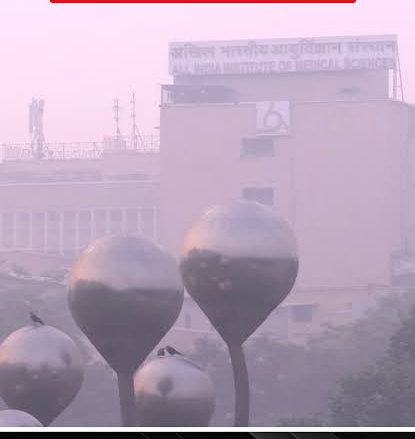
New Delhi: Air pollution remained a major health concern in the national capital on Friday, with the Air Quality Index (AQI) near the All India Institute of Medical Sciences (AIIMS) reaching 418, placing the area in the severe category.
According to readings reported from the Central Pollution Control Board (CPCB), the AQI at Rajokri Border also reached 402, while Dwarka Expressway recorded 369, falling in the very poor category.
The readings indicate that several parts of Delhi and its surrounding areas continued to experience unhealthy air conditions. The severe category is particularly concerning because prolonged exposure to polluted air can affect respiratory and cardiovascular health.
Air pollution contains a mixture of particulate matter and other pollutants. Fine particles can enter deep into the lungs, while continued exposure may aggravate existing respiratory conditions and increase health risks, particularly among vulnerable groups.
Children, older people and individuals with asthma, chronic lung conditions or heart disease are among those who may be more sensitive to poor air quality.
The latest readings have again brought attention to the challenge of controlling pollution in the national capital, especially during the winter period when weather conditions can contribute to the accumulation of pollutants.
Authorities continue to monitor air quality through stations across the region. The readings can vary considerably from one location to another, making local monitoring important when assessing pollution levels.
With some monitoring stations reporting severe AQI levels, the situation underlines the need for sustained pollution-control measures and public awareness about the health effects of deteriorating air quality.

Comment here